Custom envelope converting for printers since 1985. Send us your pre-printed flat stock or blank stock and we convert it in 14 days or less.
CONVERT ONLY. No printing. We work for the printers.
“Exclusive to the Trade”
Start here
Every high die, letterpress die and window die we run, searchable by number, size or style. Sheet sizes, yields, grain direction and layout templates all in one place.
Open the die finderWhat we do
Manufacturing envelopes, gluing and folding is what we do. Pick the method that matches how critical your register is.
A 3″ steel die cuts a lift of 150 to 200 sheets at once. Fast and economical. Cutting register can vary 1/16″ in any direction, which is within industry standards, so bleeds wrap 1/8″ over the fold lines and borders stay 1/4″ back.
Read the FAQ → Method 02A thin steel rule die cuts and scores one sheet at a time. This is the method for critically registered bleeds and borders, where image shift cannot be tolerated. Requires a larger one-up sheet because more gripper area is needed.
Read the FAQ → Method 03Two-way mailers, catalog order form inserts, comment mailers and perforated reply cards. We fold 3, 4 or 5 panels into a glued pocket with 1 or 2 perfs and a re-moisten gum strip, roll folded or double parallel.
Read the FAQ →See it run
Two short videos. One walks through the converting process, the other introduces the company.
How your flat stock becomes a finished envelope, from die cutting through gluing and folding.
A short introduction to the shop, the people and the work we do for printers.
On the floor
That is one of our envelope machines mid-run, red printed blanks feeding through the folding and gluing section. The maker’s name is cast straight into the iron: F.L. Smithe Machine Co., New York. Nobody builds a frame like that anymore.
It still runs production every week. Machines like this were made to be adjusted, rebuilt and kept in service by people who know them, and that is exactly how we run them. The register you get on your job comes from an operator reading the sheet, not from a screen.
It is also why we ask for a blueline and a proper over run. Iron this good will hold register all day, but only if the stock and the layout are right going in.
Our commitment
Envelope Converting Service was started with the concept of being an extension of the “Print Shop.” We will continue to support your efforts every way we can so that you can supply your customers with a full line of quality products.
Manufacturing envelopes, gluing and folding is what we do. And, with your continued support, we intend to be ready to solve any and all opportunities that you may send our way.
Please contact us with projects that need help and we will solve them together. Remember, your success is our success.
More about ECSBefore you ship us stock
Run through the checklist for your job type. It is the fastest way to avoid a grain-wrong setup charge or a reprint.
Standard envelope types
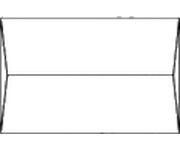
Open-side envelopes from 3″ x 4-1/4″ to 10″ x 15″. Catalog envelopes from 4-1/8″ x 5-3/4″ to 13-1/2″ x 16-1/2″. Square envelopes and special sizes on adjustable dies.

A-style envelopes are constructed with a long, elegant square flap, hidden side seams and a shorter back. They are perfect for greeting cards, invitations and announcements.

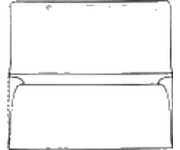
Remittance envelopes have a wallet flap which provides a large printing area for order blanks or donation information. Used by charities, schools, churches and mail order companies, these envelopes are usually printed on both sides, which flat sheet printing and converting makes super easy.

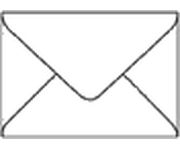
Baronial envelopes, with their pointed flap, have a traditionally formal design well suited to invitations, promotions and formal correspondence.

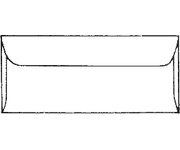
Side seam envelopes have a straight flap with round or square corners, hidden side seams and a full back. Their more custom appearance is popular with designers. Printers appreciate the smaller one-up sheet size which has the best yield from a parent sheet.

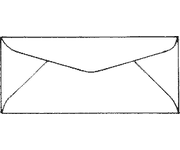
Traditional commercial styling is used for many business and personal correspondence needs. Diagonal seams work best for automated inserting and postage metering. Nested multiple-up templates make flat sheet printing and converting very price effective.

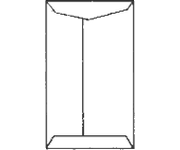
With the seal flap on the short end, these envelopes offer sturdy construction for mailing brochures and catalogs, and are more economical.

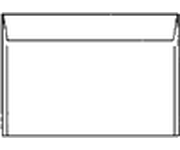
Booklet envelopes have the flap on the long side and have a more formal appearance. They work well for machine inserting and are popular for sending large photos, statements and brochures.
Send us a PDF and we will price it out. Most jobs run in 7 to 14 days.